The best Fields of Mistria gifts depend on the villager. There is no single item you should hand to everyone: each character has personal Loved, Liked, Neutral, Disliked, Hated, and sometimes Banned reactions. For efficient friendship building in version 1.0, talk to the person every day, give one replaceable Loved or Liked gift, and save an especially good gift for their birthday. A normal Loved gift gives 20 friendship points, while the same tier on a birthday gives 40.
This page is the site's general gift hub. If you are pursuing romance, start with the romanceable characters list, then use the romance guide and heart events guide to understand what those friendship gains eventually unlock. If you want the six current universal shortcut gifts, use the Universal Likes and Loves Guide. For character-specific help, see the March Gifts Guide, Adeline Gifts Guide, Caldarus Guide, or Seridia Guide.
How gifting works in Fields of Mistria 1.0
You can give each giftable NPC one present per day. The reaction tier determines the friendship reward, and birthdays add a large bonus. Current 1.0 gift references use the following values:
| Reaction | Normal day | Birthday |
|---|---|---|
| Loved | 20 | 40 |
| Liked | 10 | 30 |
| Neutral | 3 | 23 |
| Disliked | 0 | 20 |
| Hated | 0 | 20 |
A daily conversation is also worth 7 friendship points. That makes consistency surprisingly powerful. Talking plus a Loved gift is 27 points on an ordinary day, while talking plus a Liked gift is 17. You do not need to burn rare resources every morning just because they sit in a character's Loved list.
Another useful difference from some farming RPGs is that a bad gift does not erase friendship progress. Disliked and Hated gifts normally give zero points rather than subtracting points. You still lose the item and that day's gifting opportunity, so they are inefficient, but a mistake does not destroy weeks of relationship work.
Loved versus Liked: which should you actually use?
A Loved gift is mathematically better, but the best practical gift is often the item you can obtain repeatedly. Suppose a character loves an expensive gem but likes a crop or inexpensive cooked dish you can produce every few days. Giving the easy Liked item consistently can be smarter than waiting weeks for the rare Loved item.
Use this priority order:
- Birthday: reserve a Loved gift when possible because the birthday bonus makes it especially valuable.
- Normal days: use renewable Loved gifts first, then easy Liked gifts.
- Rare materials: think before gifting Mistril, valuable gems, Museum items, or ingredients needed for progression.
- Unknown items: a Neutral gift still provides a small gain, but checking a known preference is usually better.
- Disliked or Hated items: save these for experimentation or funny dialogue only when you do not care about efficiency.
This resource-aware approach matters more in a new save, when money, cooking ingredients, ore, and collection items compete for the same inventory slots.
The 12 marriage candidates to prioritize
Fields of Mistria 1.0 has 12 marriage candidates. If your main goal is romance rather than befriending the entire town, these are the characters whose gift preferences matter most:
| Candidate | Useful gift-planning note |
|---|---|
| Adeline | Likes and loves include flowers, lemon-based foods and drinks, and several valuable pink or Mistril items. |
| Balor | His stronger preferences include curries and valuable gems. |
| Celine | Flowers and nature-related items are natural places to look when building a repeatable route. |
| Eiland | Many food and archaeology-adjacent choices fit his documented preferences. |
| Hayden | Animal products and farm-related items feature heavily in his preferences. |
| Juniper | Her list contains unusual magical, monster, and specialty items, so check before gifting random forage. |
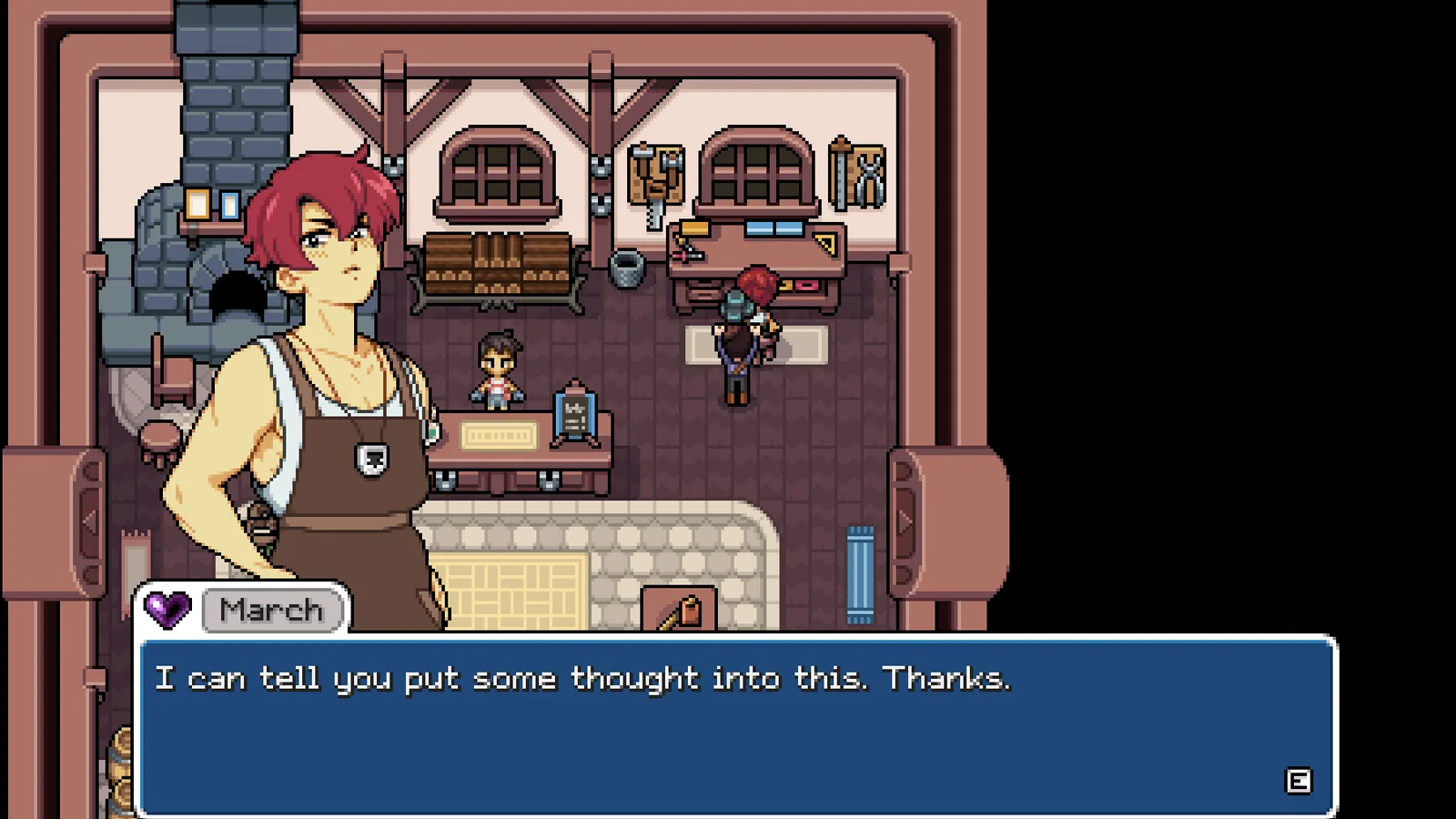
| March | Ore, ingots, sushi, and several blacksmith-flavored choices appear in his gift pool. |
| Reina | Cooking is central to many of her best options. |
| Ryis | Woodworking and crafted or forage-related choices provide several routes. |
| Valen | Food and medical or botanical themes appear across her preferences. |
| Caldarus | His late-game route has its own gift pool after his human form becomes accessible. |
| Seridia | The secret candidate has a 1.0 gift profile tied to her revealed story identity. |
The table intentionally avoids pretending that one short item is the complete gift list for each person. A good hub should help you choose a strategy, while individual character pages can hold complete Loved/Liked tables without turning this page into an unreadable wall of hundreds of item names.
If romance is your goal, the gift loop is only the first step. At 8 Hearts, use the Heart Events Guide to make the Dating decision; at 10 Hearts, the Engagement Ring Guide and Marriage Guide take over.
Birthday gifts are more important than they look
Birthdays add 20 points to the normal reaction value. That creates a counterintuitive result: even a Neutral birthday gift is worth 23 points, which is more than a normal-day Loved gift at 20. If you know someone's birthday but forgot their preference list, giving a valid gift is generally better than doing nothing.
For characters you actively romance, prepare before the date rather than opening storage on the morning of the birthday and hoping something works. Keep one known Loved item in a dedicated chest, especially when it is seasonal or requires cooking. The Calendar Guide can be used alongside this page once you begin planning a full year of birthdays and festivals.
Birthday planning also reduces waste. If a character loves a rare gem, you may get more value from saving it for the birthday instead of spending it on an ordinary Tuesday. Meanwhile, easy Liked gifts can maintain steady progress during the rest of the season.
Do universal gifts exist?
Yes. In the current 1.0 game there are verified universal Loved and Liked gifts, but recipient restrictions and category exceptions still matter. The current universal Loved set includes Cow-Shaped Donut, Queen Berry Pie, and Scent of Spring, while Candied Queen Berries, Chicky Hot Chocolate, and Floral Tea are universal Liked gifts.
Use the dedicated Universal Likes and Loves Guide for the current list, banned-recipient rules, and exceptions. That page is better for the search intent "what can I give almost everyone?" while this hub remains focused on the whole gifting system.
Some gifts are also Banned for particular recipients. The game can prevent inappropriate categories from being given to children or animals, including certain caffeinated, alcoholic, or chocolate items. A Banned item is different from a Hated gift: it is not simply a poor preference choice; the recipient cannot accept it normally.
Use Elsie and the game itself instead of guessing
You do not have to discover every preference from an external spreadsheet. Elsie's dialogue can reveal information about villagers' tastes, and character reactions help build your in-game knowledge over time. When you give a Loved or Hated item, you may also see distinctive dialogue that makes the preference easier to remember.
A sensible first-year routine is to keep notes only for the people you actually visit. Trying to memorize dozens of complete preference lists before playing can make the social system feel like homework. Start with your favorite romance candidate, a few useful townspeople, and upcoming birthdays; expand your gift chest as your farm and cooking options grow.
Fast friendship routine
If you want relationships to rise without spending most of the day hunting gifts, use a compact route:
- Pick three to six villagers you currently care about.
- Talk to each one when your normal farm, shop, or town route passes them.
- Keep stacks of easy Liked gifts rather than carrying ten rare Loved items.
- Give no more than one gift to each person per day because additional gifts are not the intended daily route.
- Check the calendar at the start of each week and pull birthday gifts from storage.
- For a romance candidate, watch the relationship meter and complete the associated heart events as they unlock.
- Once Dating is available, use the romance options guide for the 8-heart to 10-heart progression.
- At 10 Hearts, move to the Marriage Guide if you are ready to commit.
This routine works because friendship does not require a perfect daily Loved gift. Regular conversations plus replaceable gifts accumulate while you continue farming, mining, fishing, and questing.
Gifts and romance in version 1.0
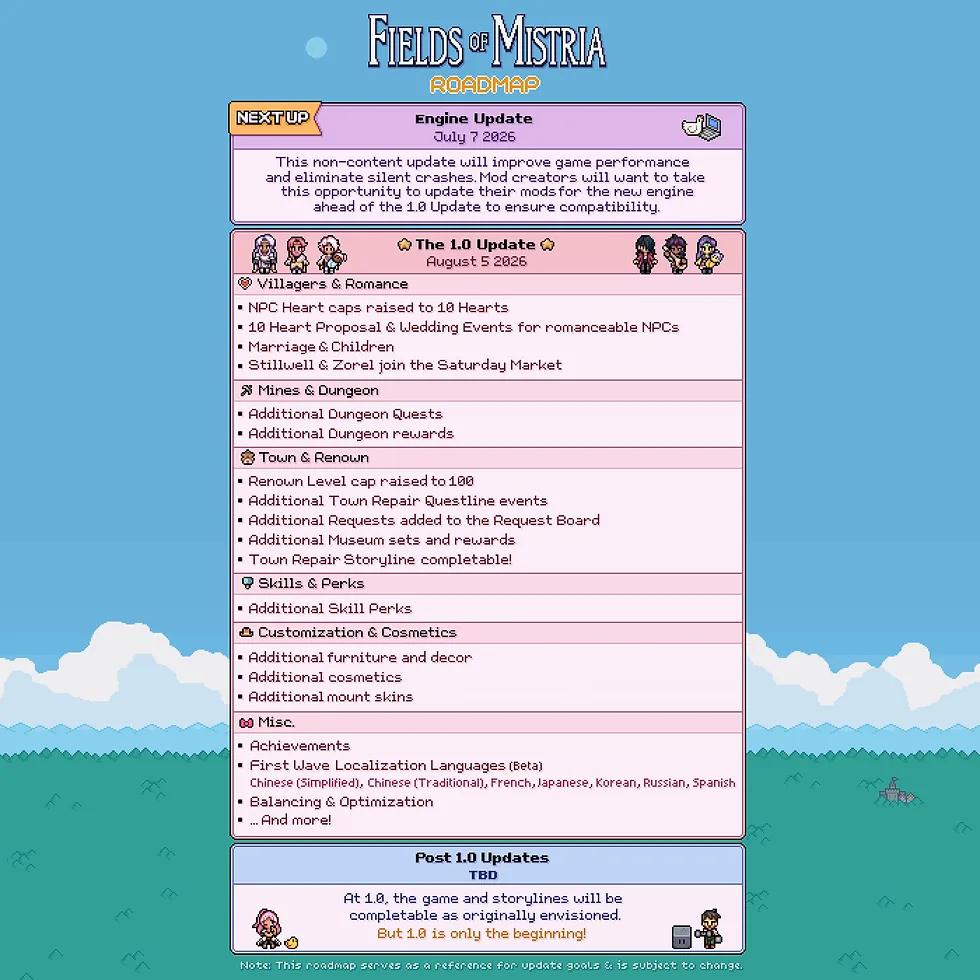
Gifts are useful for every villager, but the 12 marriage candidates have an additional payoff. Version 1.0 raises relationship progression to 10 Hearts and supports proposal, wedding, marriage, and children. Gifts do not replace heart events or story requirements; they help you reach the relationship thresholds where those systems become relevant.
At 8 Hearts, romance routes can branch into Dating or Best Friends. If you choose Dating, continued relationship progress can eventually lead toward the 10-heart proposal route. Special candidates may also have story gates. Caldarus, for example, is not simply available from the beginning like a normal town resident, so read his character guide before stockpiling gifts for him. Seridia has her own late-story route covered in the Seridia Guide.
After marriage, gifting is no longer the end goal of the relationship system. The game adds spouse routines and optional family progression; the Children Guide covers what happens after the wedding.
Common gift mistakes
Using rare resources just because they are Loved. A premium gem or late-game material may be better saved for crafting, Museum progress, or another objective. Relationship efficiency includes opportunity cost.
Forgetting birthdays. The birthday bonus is large enough that a mediocre birthday gift can outperform an excellent ordinary-day gift.
Assuming character themes guarantee preferences. A farmer does not automatically love every crop, and a blacksmith does not automatically love every ore. Use verified preferences rather than role-playing assumptions when efficiency matters.
Following Early Access lists without checking 1.0. The full release added characters and items. A guide that predates August 2026 can be useful for older villagers but should not be treated as a complete 1.0 database.
Trying to max everyone immediately. You have one gift opportunity per NPC per day, but you do not need to use all of them. Focus on a manageable social route and expand later.
Fields of Mistria gifts FAQ
What is the best gift in Fields of Mistria?
There is no single best personal gift for every NPC, but 1.0 does include verified universal Loved and Liked items. For an individual villager, a Loved gift is still the strongest normal choice; for routine play, an easy repeatable Liked gift can be more efficient than sacrificing a rare Loved item.
How many gifts can I give a villager per day?
Plan around one gift per villager per day. Talking to the villager separately also provides friendship progress, so combine conversation and gifting when you pass them.
Do hated gifts reduce friendship?
Current 1.0 gift tables show Disliked and Hated gifts awarding zero normal friendship points rather than subtracting points. You still waste the item and daily opportunity.
Are birthday gifts doubled?
The current point table is better described as a +20 birthday bonus: Loved becomes 40, Liked 30, Neutral 23, and even Disliked or Hated reactions receive 20. This is why birthdays are worth planning around.
Should I give a Loved gift every day?
Only when it is easy to replace. Use common Loved gifts when available, reliable Liked gifts for ordinary days, and save scarce Loved items for birthdays or important relationship pushes.
Where is the Adeline gift guide?
The generic /characters/gifts/ URL now serves the whole game instead of one character. Use the dedicated Adeline Gifts Guide for her personal preference route.
Related relationship guides
- All 12 Romanceable Characters
- Romance Options Guide
- Heart Events Guide
- Universal Likes and Loves
- March Gifts Guide
- Adeline Gifts Guide
- Marriage Guide
- Engagement Ring Guide
- Children Guide